For something which is generally expected to be short, compact and aesthetically appealing, the picture book can embody quite a bit of complexity. My main takeaway from our discussion on picture books and difficult topics was the focus on functionality and how we assess it. What does a picture book do? Do different kinds of picture books do different things? What is a good picture book? What are the standards of judgment? What is it supposed to do? Simultaneously, it is interesting to see how the answers to these various questions might vary depending upon who the reader/viewer/listener is and under what circumstances and conditions, contact/communication with the book happens.
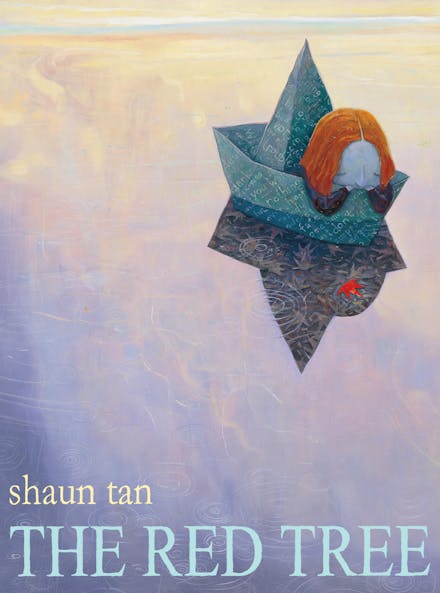
Why are picture books often aimed at children? Perhaps “aimed” is not the most appropriate word, let’s say – why are picture books considered suitable for children? Is it the economy of words or the abundance of images? Perhaps it is this combination itself which allows it to become accessible to the child just learning new words and struggling with complex ideas (example: death, trauma, sexuality). However, it might fall in the trap of oversimplification of complex ideas, to the point where death is explained and examined as a ritual, which exempts the emotional aspect of the incident. This happens in The Dead Bird by Margaret Wise Brown (illustrated by Remy Charlip, and later by Christian Robinson). On the contrary, Wolf Erlbruch’s poignantly beautiful Duck, Death and the Tulip takes an entirely different approach. The uncomfortable question however is, why do we as adults have a problem with the matter of fact tone of The Dead Bird? Will a child reading it react similarly? Will a child even read it? Or will it be read to him/her? The problem is, a large part of the material meant for children has to pass through the filter of adult censorship. Perhaps we are not comfortable with children being comfortable with certain things or perhaps we are far too protective, our indulgence of them is careful, measured, limited. The aim is not to find flaws in our approach but humbly accept the reality of it. For similar reasons, Shaun Tan’s The Red Tree can seem far too complex and ambiguous for children. We might think, its dystopian images, complex symbolism and narrative structure will be hard to unpack for the child. After all, it’s hard enough for us! I personally feel, it’s one of those books that work well because of its complexity. It has the potential to be something different for everyone at different points in time.

This brings us back to the question of what does a picture book set out to do? My observations tell me this is largely unfixed and changeable. It may not always have a simple linear narrative. Picture books can have clear goals and messages and function as message books of some sort. These books are separate from others which might be quite ambiguous or open ended. The latter can be seen as set of visual, textual resources which can be used to make multiple meanings. I’d call these ‘resource books’ – a visual-textual toolkit of sort, with various uses. Another example of resource books would be Chris Van Allsburg’s The Mysteries of Harris Burdick. Here, there are no stories and at the same time many, endless stories. It is a collection of uncanny and unexplainable illustrations with captions which invite us to weave our own.
The functionality of the illustrated book, one may conclude, is driven by the combination of economy of words and abundance of images in actual spatial terms of the print surface. The author and/or illustrator faces the creative challenge of accommodating something intelligent, beautiful and resourceful that often, if not always ends up passing through the parental filter. And Tango Makes Three, written by Peter Parnell, Justin Richardson and illustrated by Henry Cole seems to “get this right”. The story of a couple of male penguins who form a family and bring up a chick, skips all the pitfalls of over explanation and celebrates gay love in the most beautiful, natural way possible. Despite being based on true facts, even this book reportedly had to face hard censorship. And this, makes me think – will there ever be that perfect picture book? Isn’t it about time we sat down and examined how parental filter works, besides engaging with a book’s aims and functionality? Therein lies the complex mystery of children, autonomy and the world of stories and non-stories.
About the author: Aratrika Choudhury is an illustrator and a second year PhD student at QMUL. Her masters focused on Bengali illustration culture, and her doctoral research focuses on print culture and colonial book history.




 QMUL Centre for Childhood Cultures Reading Group